
The numbers from Nielsen’s 2025 “Europe in focus: Marketing trends to watch” tell a familiar story: European marketers are working with tighter budgets. In 2025, 60% were forecasting a reduction in ad spend, compared to the 54% global average.
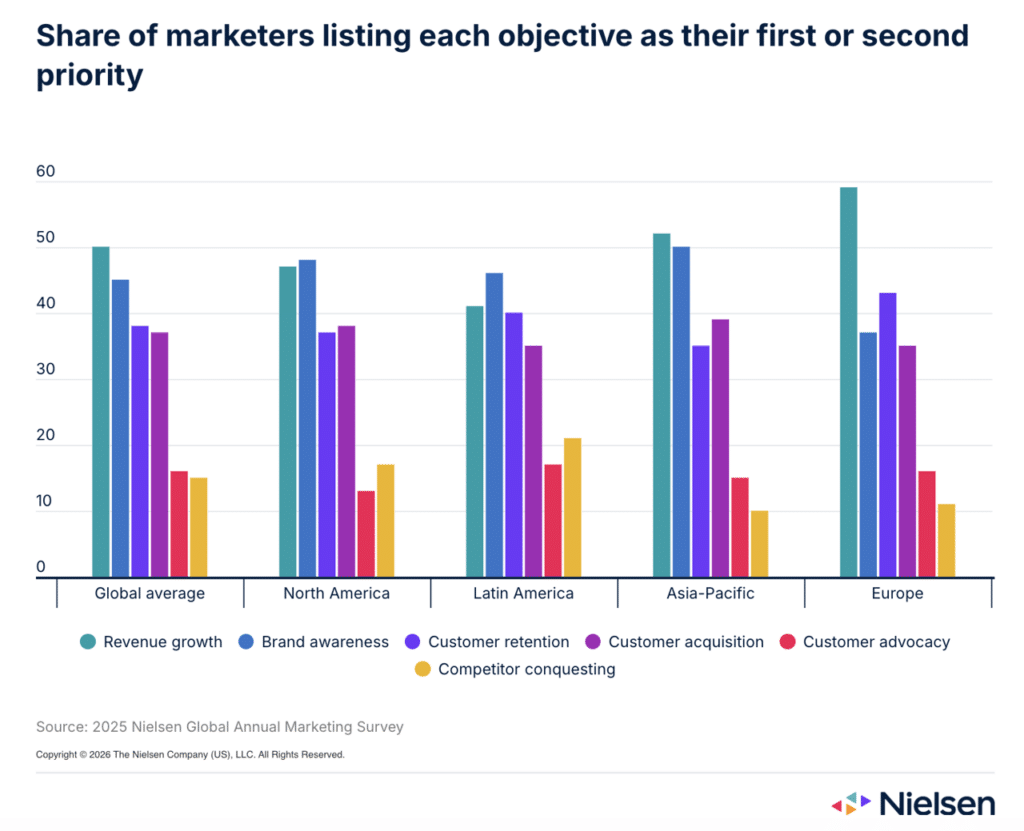
The report also tells us that, in response, European marketers have made customer retention their primary focus, above new customer acquisition.
Retaining an existing customer costs less than acquiring a new one, and in a period of constrained budgets, doubling down on loyalty makes economic sense.
As displayed on the chart below, 43% of marketers in Europe said customer retention was their top or second priority in 2025.
Apart from focusing on the visible mechanics (loyalty programs, re-engagement campaigns, personalized offers), we think transparency and trust are worth a much closer look to improve retention. Here’s why.
The trust gap is a retention problem
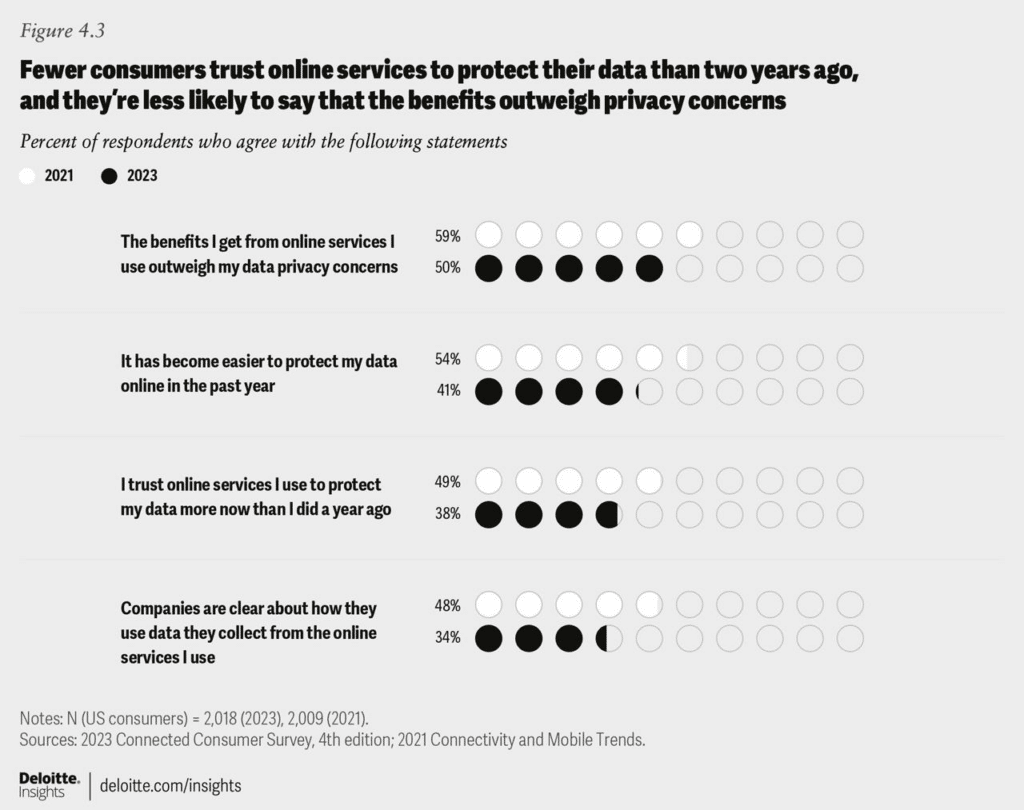
Here’s the uncomfortable truth: only 34% of consumers believe companies are honest about how they use their data (Deloitte, 2023).
When trust is that low, even the best retention strategy has a ceiling. Loyalty programs, personalized emails, exclusive offers: they all depend on people believing your intentions are good.
Transparent data practices close that gap because the way a company handles data is a visible signal of how it respects its customers.
In Europe, this matters more
With strong regulations like the General Data Protection Regulation (GDPR), awareness of data rights is higher in Europe than almost anywhere else.
A consent banner that buries the “reject” option, a privacy policy written in dense legal language, an email list with no real way to update preferences: these experiences reduce engagement and result in less willingness to share information voluntarily.
It’s also worth noting that the same Nielsen report found European marketers to be the only region globally to rank transparency, not accuracy, as their top priority for measurement technology. If you value transparency in the tools you use, it follows to ask whether you’re extending the same standard to the people you’re marketing to.
Where data experiences quietly erode trust
Most marketing teams genuinely care about trust, but compliance often stays on the back burner. Instead, it’s best to bring data process design into your customer experience strategy rather than treating it as a back-office concern.
Some of the most common patterns:
- Pre-ticked boxes: A legal issue in most European markets, and a trust issue. It signals that the default assumption is that customers will agree, rather than that they’re being given a genuine choice.
- No way to adjust preferences: Someone who consented to all marketing communications two years ago may now only want product updates. If the only option is a full unsubscribe, the company loses the contact entirely when a more granular preference would have kept the relationship alive.
- Cookie banners that obscure the reject option: Customers increasingly recognize dark patterns. When the “accept all” button is prominent and the alternative is buried, visitors get frustrated and attribute it to the brand.
- No straightforward way to unsubscribe: When it takes more than a few seconds to find the unsubscribe link, or when the process requires multiple confirmations, customers notice. Sometimes the link isn’t even present. The experience communicates that leaving is inconvenient by design.
- Consent language that explains nothing: When consent language is vague, people can’t make an informed choice, and over time they become more suspicious.
These accumulate into a picture of how a company treats customers, and that picture has a direct effect on retention.
What a more transparent approach looks like
Some easy fixes that can have a great impact on trust:
- Consent banners that offer a genuine choice: Both options equally accessible, with language that explains what’s actually being collected and why. This is the minimum standard under GDPR, but many implementations still fall short in practice.
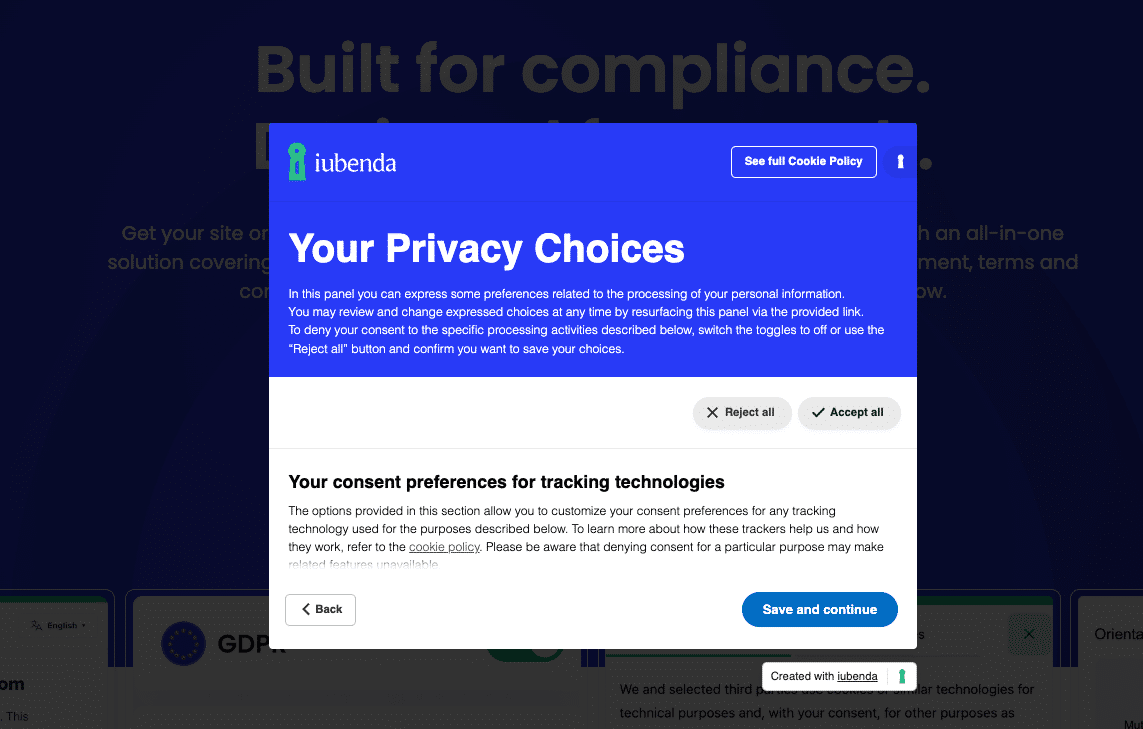
- A privacy preference center: Rather than a binary opt-in or opt-out, a preference center lets customers decide what they want to receive and how. Someone who reduces their preferences is still a subscriber, on their own terms. That’s a stronger signal of intent than a passive opt-in from years ago. For marketers, it also means having customer lists that are more reliable.
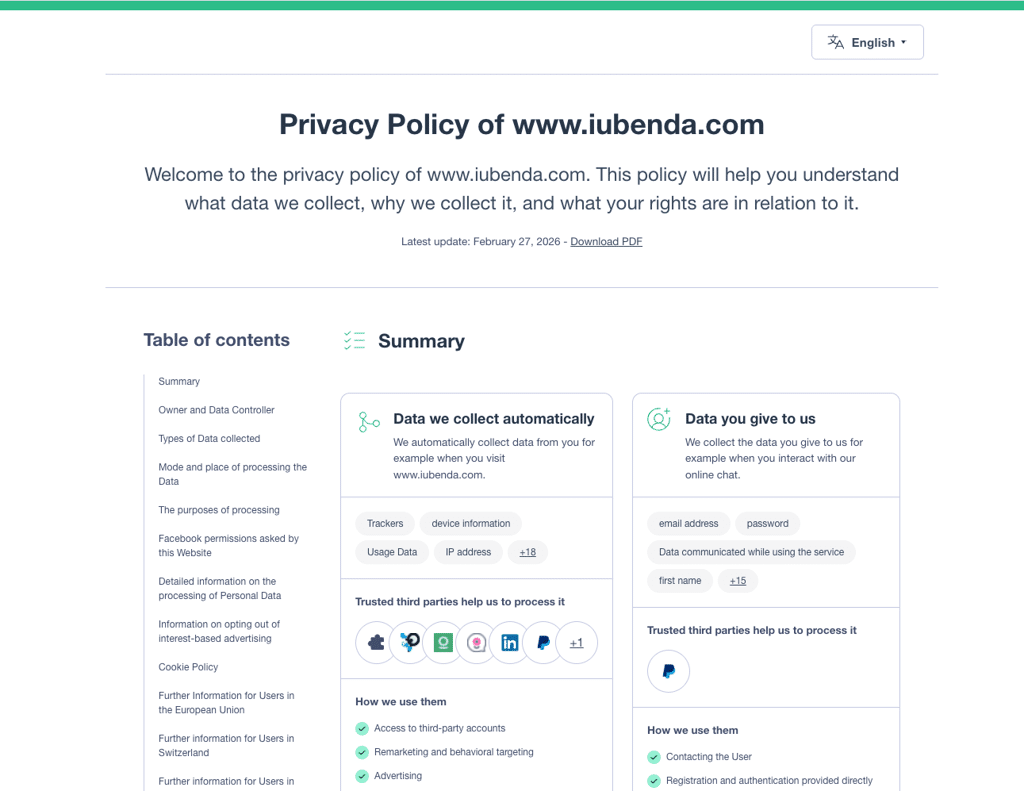
- A privacy policy written to be read: Most companies draft privacy policies to satisfy legal requirements, not to communicate clearly. A policy in plain language, organized visiaully so a non-specialist can find what they’re looking for, functions as evidence of transparency rather than just a legal document.
Why giving people control tends to increase engagement, not reduce it
The “Privacy by design: the benefits of putting people in control” report by Google concludes that:
“There are strong privacy practices that brands can deploy to increase feelings of control, and the most effective combinations have a notable positive impact on more than just feelings of control (…) Our study suggests brands that can offer these experiences will, over time, see a positive snowball effect — people will feel in control, which increases brand trust and boosts brand preference. Brands that neglect privacy risk the opposite scenario.”
Trust is built through the cumulative experience of interactions with your brand:
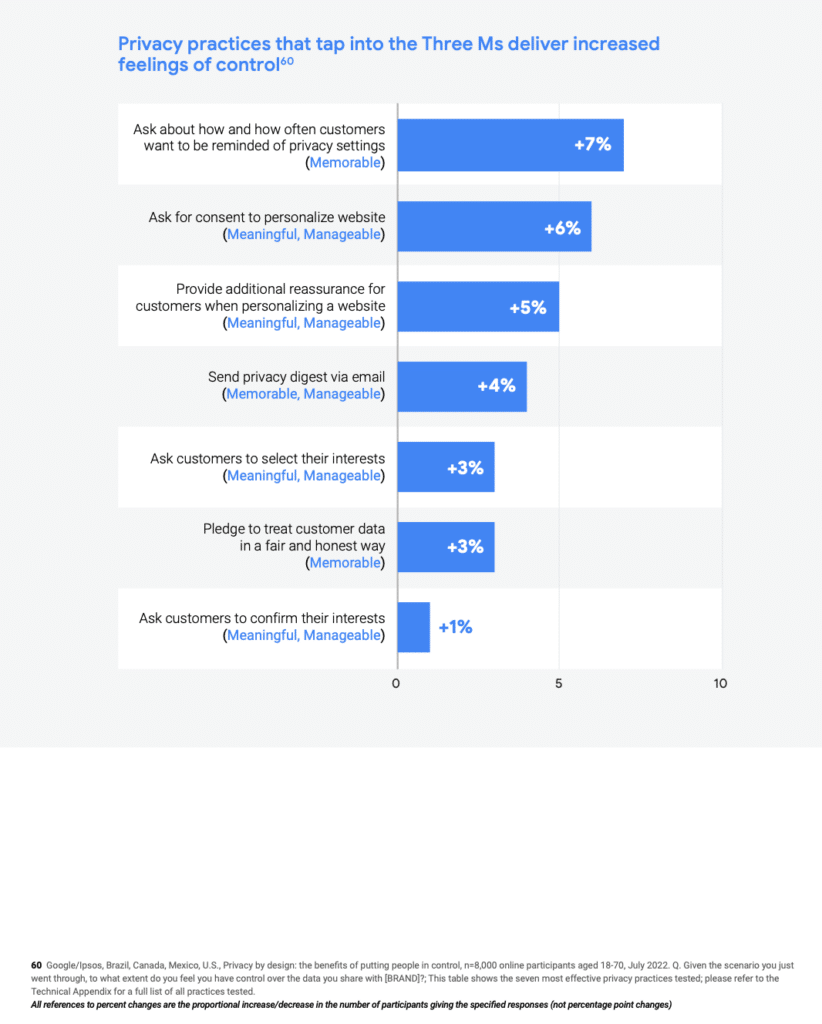
Let’s admit it, it can sound counterintuitive, but giving people more control doesn’t reduce engagement, quite the opposite.
For example, having a clear preference center refines your audience into people who actually want to hear from you, and that audience converts better. This is essential to keep in mind for your retention strategy.
iubenda: built for global compliance, designed for trust
We built our professional tools around the idea that consent and privacy infrastructure should function as a brand asset, not just a compliance requirement.
In practice, that means:
- Consent banners built to meet legal requirements: Designed to give customers the right information and a genuine, understandable choice.
- Privacy widget: Meaningful control over what users have agreed to, with a straightforward way to adjust those choices at any time. Available as a small icon on all your pages to be paired with your accessibility widget.
- Privacy and Cookie Policy Generator: Clean and readable policies in plain language, updated to reflect changes in the law as they happen.
Inspire more trust in your brand and improve retention