

As a small business owner, keeping your privacy practices aligned with privacy laws is essential to protect your customers’ personal information. One crucial step is drafting a privacy policy tailored to your needs.
In this article, we’ll provide a privacy policy example that small businesses can use to create their own document.
In short
- What is a privacy policy?
- Does my small business website need a privacy policy?
- How do I create a privacy policy for my business?
- What are some examples of privacy policies for small businesses?
- Key privacy laws impacting small business privacy policies
- Privacy policy example for small business
- How to write a professional privacy policy for small business
What is a privacy policy?
A privacy policy is a legal document that outlines how your business collects, uses, and protects personal information from your customers. It should be readily available on your website, and customers should be able to easily access and understand it.
Privacy policies are legally required under most global privacy laws, so they’re essential for any business that has an online presence.

Does my small business website need a privacy policy?
Yes, your small business website or even an e-commerce store definitely needs a privacy policy. This policy informs your website visitors how you collect, use, and handle their personal information. It’s important because laws, like the GDPR in Europe, the CCPA in California, and the LGPD in Brazil require you to have a privacy policy if you collect personal information from their residents. A privacy policy also shows your customers or users that you care about their privacy.
How do I create a privacy policy for my business?
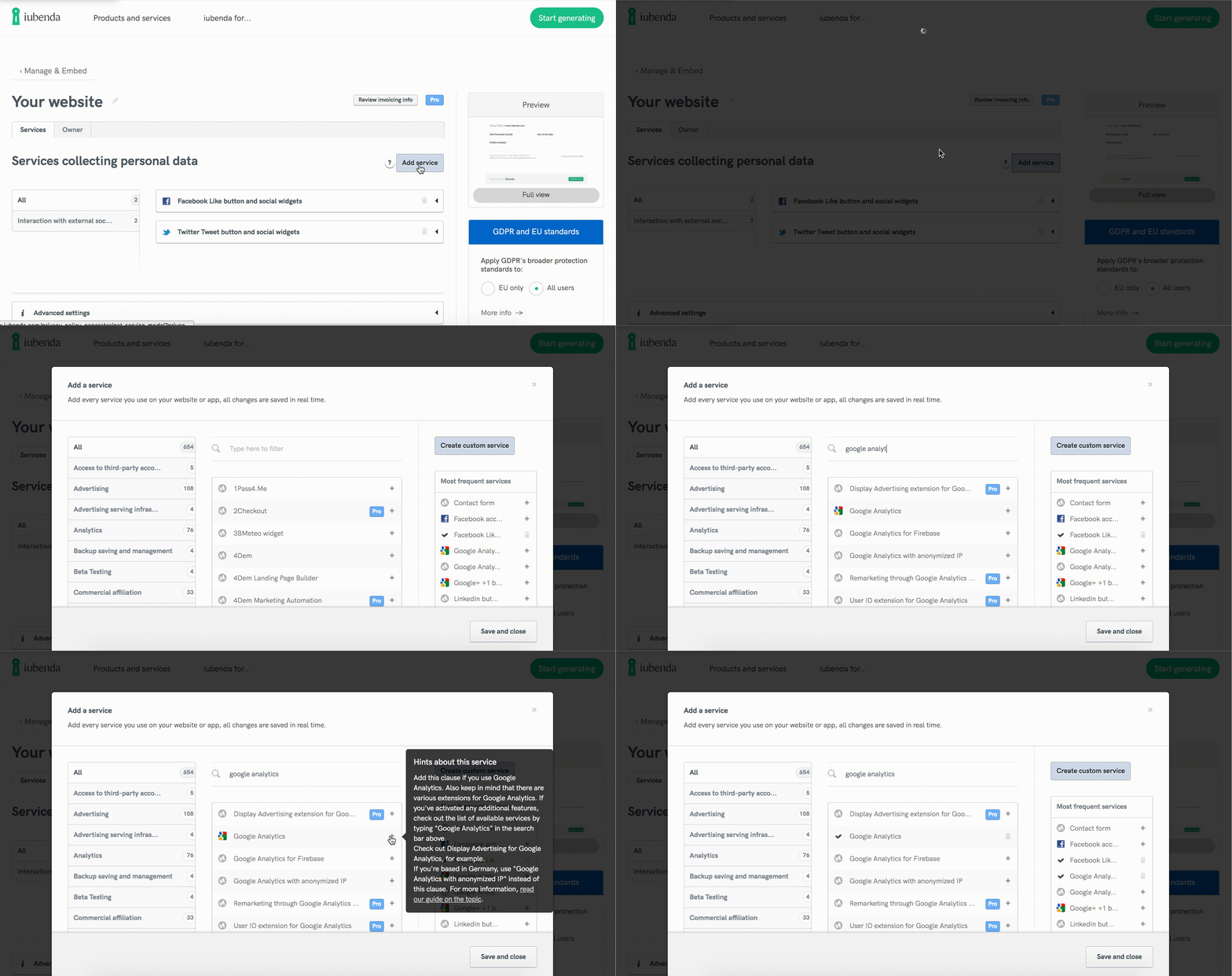
To create a privacy policy for your business, the most cost-effective way is to use a high-quality privacy policy generator. This tool lets you customize your policy to reflect your specific data collection and processing practices. Here’s how you do it:
- Choose a generator that allows customization and complies with key privacy laws like the GDPR, CCPA, LGPD.
- Enter details about how your business collects, uses, and shares personal information.
- Review the generated policy draft thoroughly to ensure it accurately matches your practices and complies with relevant laws.
- Make the necessary adjustments to fine-tune the policy to your business’s unique operations.
What are some examples of privacy policies for small businesses?
Examples of privacy policies for small businesses typically include clear sections that describe:
- What personal information is collected (e.g., names, email addresses, payment information).
- How this information is collected (e.g., through website forms, online purchases).
- The purpose of data collection (e.g., processing orders, marketing).
- Data sharing and protection measures (e.g., encryption, sharing with third-party services for order fulfillment).
- User rights (e.g., the right to access, delete, or correct their information).
- How to contact the business for privacy concerns.
Remember, each business is different, so your privacy policy should reflect your specific practices and comply with the laws that apply to your business. Regular updates are crucial to reflect changes in your business or in the law.
Key privacy laws impacting small business privacy policies
Several laws around the world require your small business to have a privacy policy if you collect personal information from residents in those countries, regardless of where your business is based. Keep in mind, these laws are designed to protect the privacy and personal data of individuals, and they apply to all online businesses, including e-commerce sites, blogs, service providers, and apps.
Here’s an overview of some major laws that might require a privacy policy for your small business:
1. General Data Protection Regulation (GDPR) 🇪🇺
- Region: European Union (EU)
- Applies to: any business that processes personal data of EU residents, regardless of the business’s location.
- Requirements: among other obligations, businesses must provide a detailed privacy policy that includes the purpose of data processing, the legal basis for processing, data subject rights, and information about data transfers outside the EU.
2. California Consumer Privacy Act (CCPA) and California Privacy Rights Act (CPRA) 🇺🇸
- Region: California, United States
- Applies to: businesses that collect personal information from California residents and meet certain thresholds, such as annual gross revenues exceeding $25 million, buying, receiving, selling, or sharing the personal information of 50,000 or more consumers, households, or devices for commercial purposes, or deriving 50% or more of annual revenues from selling California residents’ personal information.
- Requirements: businesses must provide a privacy policy that details the categories of collected information, the purposes for which the categories of personal information are used, and consumer rights under the CCPA/CPRA.
3. Personal Information Protection and Electronic Documents Act (PIPEDA) 🇨🇦
- Region: Canada
- Applies to: private-sector organizations that collect, use, or disclose personal information in the course of commercial activity in Canada, except in provinces that have their own privacy laws deemed substantially similar to PIPEDA.
- Requirements: organizations are required to obtain consent for the collection, use, and disclosure of personal information and must provide a privacy policy that explains these practices in detail.
4. Brazil’s General Data Protection Law (LGPD) 🇧🇷
- Region: Brazil
- Applies to: any business or organization that processes personal data of individuals in Brazil, regardless of the company’s location.
- Requirements: similar to the GDPR in Europe, businesses must provide transparent information about the use of personal data, including a privacy policy detailing the categories of collected data, the purposes of processing, and the rights of data subjects.
Review applicable laws: determine which laws apply to your business based on where your customers are located, not just where your business operates.
Customize your privacy policy: use a high-quality privacy policy generator to create a policy that meets the specific requirements of these laws.
Stay updated: privacy laws are subject to change, so it’s important to regularly review and update your policy to keep it aligned with current requirements.
Privacy policy example for small business
Below, you’ll find a privacy policy example for a small business. Each section shows you what to include and gives you a real-world excerpt to work from. Keep in mind your policy needs to reflect your actual data practices, so treat this as a starting sample, not a copy-paste solution. If you are looking for a more complete privacy policy template, copy our template in HTML or download it in Word/PDF here.
Can I write my own business privacy policy for small business?
Writing your own privacy policy is possible, but it comes with real risks. A generic or self-written document may not cover the specific laws that apply to your business (such as the GDPR if you have users in the EU, or the CCPA if you serve California residents). It may also miss clauses required by your business model (for example, if you use third-party analytics tools or run a subscription service), and fall out of date when regulations change without you knowing.
A privacy policy is a complex legal document that needs to be accurate, clear, and legally sound. That’s why we recommend using the following example as a starting point. A more reliable option is a privacy policy generator or talk to a legal professional (more costly).
I. Introduction
Note: Start with who you are, what the policy covers, and how users can reach you.
“We are [Company Name]. This privacy policy explains what personal information we collect when you use our services, how we use it, and how you can contact us with any questions. You can reach us at [email address].”
II. Personal information
Note: List the specific types of data you collect. Be precise: only include data you actually collect.
“The personal data we may collect includes: first name; last name; email address; cookies and tracking technologies; usage data (such as pages visited, time spent on site, and device information).”
III. Use of personal information
Note: Explain what you do with the data: cover orders, marketing, legal compliance, and any third-party sharing.
“We collect your personal data to provide our services, comply with legal obligations, and respond to your requests. If we share your data with third parties (such as payment processors or analytics providers), we describe this in detail within this policy.”
IV. Protection of personal information
Note: Describe the security measures you have in place. Focus on the key protections: you don’t need to list every technical detail.
“We take appropriate security measures to prevent unauthorized access, disclosure, or destruction of your data. Processing is carried out using IT-enabled tools and follows procedures strictly tied to the purposes outlined in this policy.”
V. Cookies and other technologies
Note: Explain which cookies and tracking tools you use and why. Disclose any third-party tools like Google Analytics.
“We use cookies and similar tracking technologies to operate our website and understand how visitors use it. Third-party services we use may also set cookies on your device. You can manage your preferences through our cookie banner.”
Check out this guide on cookies and the GDPR: what’s really required.
VI. Opt-out options
Note: Tell users how they can withdraw consent or opt out of marketing.
“You can unsubscribe from our marketing emails at any time by clicking the ‘unsubscribe’ link in any message we send. To opt out of other types of data processing, contact us at [email address].”
VII. Data retention
Note: Explain how long you keep personal data and why. This varies depending on the type of data and your legal obligations.
“We keep your personal data for as long as needed to provide our services or meet legal requirements. For example, data tied to a contract will be retained until the contract is fulfilled. Once the retention period expires, your data will be deleted.”
VIII. Privacy policy updates
Note: Let users know you may update the policy and how you’ll notify them.
“We may update this privacy policy from time to time. When we do, we’ll revise the date at the top of this page and, where required, notify you directly. We recommend checking this page periodically for any changes.”
To see how this all comes together, check out our small business privacy policy example below:
Privacy PolicyA clear privacy policy tells your customers how you handle their data, and it’s a legal requirement under most global privacy laws. Get it right and it also builds trust in your business.
How to write a professional privacy policy for small business
Writing a privacy policy on your own isn’t easy. It takes legal know-how, and mistakes can lead to legal action and penalties.
That’s why we recommend iubenda’s privacy policy generator. It’s designed by legal experts and covers privacy laws from multiple countries.
PRIVACY POLICY GENERATOR
Easily create a privacy policy for your small business in minutes
- Scan your site: we suggest all the services you need to add
- Generate a high-quality legal document: clauses have been pre-drafted by lawyers
- Embed in your website’s footer with one click
- Dynamically add, remove, or update text at any time
Try the generator with our 14-day money-back guarantee