

Skip the template: ask Claude or ChatGPT to generate your privacy policy from a scan of your live site. See how it works
In short
Need a privacy policy for your app? This quick guide has you covered! Learn the essentials for iOS and Android apps, discover why a mobile app privacy policy matters, and see how to create one without the headache. Read on for tips and examples that help you build user trust.
Jump to
- What is a mobile app privacy policy?
- Key elements of a mobile app privacy policy
- Do you need a privacy policy for your mobile app?
- Current applicable laws for mobile app privacy policies
- Privacy policy requirements for iOS apps
- Privacy policy requirements for Android apps
- General privacy policy requirements for all apps
- How to give users access to your mobile app privacy policy
- Example app privacy policy: learn from real samples
- Download our free app privacy policy template
- How often should I update my app’s privacy policy?
- How do you create a mobile app privacy policy?
What is a mobile app privacy policy?
A mobile app privacy policy is a legally binding document that outlines how a mobile application collects, uses, stores, and shares user data. It’s a legal requirement under various data protection laws, and it’s also how you show users you take their data seriously.
Key elements of a mobile app privacy policy
Here are some of the key elements that a mobile app privacy policy typically includes:
- Types of data collected: this section clearly describes what kinds of personal data the app collects from users. It can range from basic information like name and email address to more sensitive data like location, financial details, as even IP addresses.
- Purpose of data collection: the policy must specify why this data is being collected. Whether it’s for improving the user experience, personalized advertising, or functionality purposes, the intent behind the data collection should be clearly stated.
- Data usage: how the collected data is used is a critical component. This part addresses how the data supports app functionality or any other secondary purposes, like marketing or analytics.
- Data storage and security: it is crucial to disclose where the user data is stored and what security measures are in place to protect it. This includes detailing any encryption, access controls, or other security practices used to safeguard data.
- Data sharing and disclosure: if the app shares data with third parties, the policy must disclose these relationships and the purpose behind the data sharing. This includes sharing with affiliates, service providers, or in case of legal requirements.
- User rights and choices: the policy should outline the rights users have regarding their data. This includes the right to access, correct, or delete their data and how to opt-out of data collection or sharing.
- Policy updates and changes: users should be informed about how they will be notified of any changes to the privacy policy. This keeps users informed as data protection laws evolve.
- Contact information: finally, providing contact details for users in case of questions or concerns about their data privacy is essential.
Do you need a privacy policy for your mobile app?
The short answer is yes. You need a privacy policy for your mobile app, especially if it collects personal data from users. A privacy policy for apps isn’t just a best practice: it’s a legal requirement in many legislations to protect user privacy.
From the GDPR in Europe to various US state laws, if your app processes personal data, you’re typically obligated to disclose your data handling practices through a complete privacy policy. It’s a legal requirement to keep users informed about how you manage their data. In short, a privacy policy is essential: it keeps you on the right side of the law and builds user trust.
Current applicable laws for mobile app privacy policies
Several laws globally impact mobile app privacy policies. The GDPR in the EU, the CCPA in California, and various other regional laws mandate clear, concise privacy policies for apps handling personal data. These laws also dictate consent requirements and user rights regarding their data.
Here’s an expanded look at some of the key laws affecting mobile app privacy worldwide:
General Data Protection Regulation (GDPR) – European Union 🇪🇺
The GDPR is a far-reaching data protection law that applies to all entities processing the personal data of EU residents, regardless of where the entity is based.
It mandates clear consent for data collection, gives individuals rights over their data (like access, rectification, and erasure rights), and requires data processors to implement protective measures.
Non-compliance can result in significant fines, up to 4% of annual global turnover or €20 million, whichever is higher.
California Consumer Privacy Act (CCPA) – United States 🇺🇸
The CCPA applies to businesses that collect personal data from California residents and meet certain thresholds regarding revenue or the amount of data collected.
It provides California residents with the right to know about and opt-out of the sale of their personal data, access their data, and request its deletion.
Violations can lead to fines, and it also gives consumers the right to sue for certain types of data breaches.
Children’s Online Privacy Protection Act (COPPA) – United States 🇺🇸
COPPA applies to websites and online services (including mobile apps) that collect information from children under the age of 13.
It requires obtaining verifiable parental consent before collecting personal information from children, providing a clear privacy policy, and maintaining the confidentiality and security of the information. Non-compliance can result in civil penalties.
Data Protection Act – United Kingdom 🇬🇧
Post-Brexit, the UK has its own version of the GDPR, known as the UK GDPR.
It retains most of the principles, rights, and obligations of the EU GDPR but exists under UK law.
Like the EU GDPR, it imposes strict fines for non-compliance and gives individuals significant control over their personal data.
Each of these laws has its nuances and specific requirements. If your app reaches users covered by these laws, take the time to understand which requirements apply to you.
Privacy policy requirements for iOS apps
Apple’s commitment to user privacy is evident in its stringent requirements for iOS apps, particularly when it comes to privacy policies. Here’s what developers need to know:
- Mandatory privacy policy: all iOS apps that collect user data must have a privacy policy. This is especially critical for apps available on the App Store and those utilizing in-app purchases.
- Accessibility: the privacy policy must be accessible within the app and during the submission process on the App Store. This ensures users can review the policy before downloading the app.
- Content requirements: the policy should clearly disclose what data the app collects, how it’s collected, and its use. It must also cover any third-party access to this data.
- Data usage explanation: if the app collects sensitive personal information, the policy must detail the purpose of this collection and how it benefits the user.
- Consent: though not explicitly required by Apple, it’s advisable to design the app to seek user consent for data collection, aligning with broader data protection regulations like the GDPR.
- Security measures: describing the security measures in place to protect user data is crucial. This includes encryption, server security, and handling of data breaches.
- Updates and changes: apps must notify users of any changes to their privacy policies, ensuring ongoing transparency and compliance.
Already in the app game? Explore these essential iOS app development tips.
Privacy policy requirements for Android apps
Google’s requirements for Android apps focus on transparency and user consent. Here are the key points developers should consider:
- Mandatory for certain apps: Android apps that handle sensitive user data or require certain permissions must have a privacy policy. This is applicable both in the app and on the app’s Google Play listing.
- Clear disclosure: the policy must clearly state what data the app collects, why it’s collected, and how it’s used. This includes the sharing of data with third parties.
- User consent: apps must not only disclose their data collection practices but also obtain user consent, particularly when collecting sensitive information.
- Data protection: the policy should detail the protective measures in place to safeguard user data, including encryption and secure data storage practices.
- Access to policy: the privacy policy must be easily accessible from within the app, typically in the settings or about section, and also on the app’s Google Play Store page.
- Compliance with laws: developers need to ensure that their app’s privacy policy and practices comply with all applicable laws and regulations, including those specific to the regions where the app is available.
- Updates and modifications: any changes to the privacy policy must be communicated to users, and apps should ensure that they maintain current and compliant practices in line with their policies.
While there are similarities in the privacy policy requirements for both iOS and Android apps, there are also platform-specific nuances. For developers, the key lies in creating a clear, transparent privacy policy that meets the standards set by both Apple and Google.
Already have your app in hand? Check out our expert app development tips for iOS and Android.
General privacy policy requirements for all apps
Regardless of your app’s platform, these general requirements are the backbone of any effective and compliant privacy policy.
Types of data collected
- Personal identification information: this includes names, email addresses, phone numbers, and physical addresses.
- Sensitive data: details like camera, financial data, or contacts.
- Usage data: information on how users interact with the app, including app activity, session durations, and clicked links.
- Technical data: device information, IP addresses, operating system details, and browser types.
- Location data: real-time geographical location of the user’s device.
The privacy policy should list all these data types, providing users with a clear understanding of what information the app collects.
Purpose of data collection
- Explain why each type of data is collected. For instance, email addresses might be used for account setup and communication, while location data could be necessary for location-based services.
- If data is used for improving the app, targeted advertising, or for analytics purposes, this should be explicitly stated.
Data sharing and disclosure policies
- Detail any circumstances under which the app might share user data with third parties. This includes partnerships with other companies, data analysis services, or in response to legal requests.
- If the app uses third-party services (like analytics or advertising platforms), their role in data handling should be described.
- Policies should also cover data transfer in events like mergers or acquisitions.
User rights concerning their data
- Users should be informed about their rights regarding their data, including the right to access, correct, or delete their personal information.
- Provide information on how users can exercise these rights, such as contact procedures or in-app tools.
- Outline the app’s response to Do Not Track signals and similar privacy preferences.
Contact information
- Offer clear contact details (like an email address or a phone number) for users to raise privacy concerns or inquiries.
- This section can also include the details of the data protection officer or a similar point of contact, if applicable.
The policy must be written in clear, understandable language to make it accessible to all users, regardless of their legal or technical knowledge.
How to give users access to your mobile app privacy policy
Make your privacy policy easy to find. It’s not just good practice, it’s often a legal requirement. Here’s how you can make your privacy policy accessible and user-friendly:
| Prominent placement in the App Store listing | Include a link to your privacy policy in the app’s listing on platforms like the App Store for iOS and Google Play for Android. This allows users to review the policy before downloading the app. |
| Direct link within the app | Within the app, provide a clearly labeled link or section for the privacy policy. Common locations include the app’s settings menu, about page, or under a dedicated “privacy” section. Ensure that this link is visible and easy to find, rather than buried in a submenu or only mentioned in fine print. |
| During the onboarding process | Introduce the privacy policy during the app’s onboarding process. This can be done through a welcome screen that briefly summarizes the policy with an option to read the full document. Consider using engaging summaries or bullet points to highlight key aspects of the policy, making it more user-friendly. |
| Regular updates and notifications | When the privacy policy is updated, notify users through the app or via email. This notification should include a summary of changes and prompt users to review the updated policy. In-app pop-up notifications or dedicated sections in update logs can be effective for this purpose. |
| Through customer support | Train your customer support team to guide users to the privacy policy and answer related queries. Include references or links to the privacy policy in automated responses or help sections of the app. |
Do you need a privacy policy in multiple languages? Find out here.
Example app privacy policy: learn from real samples
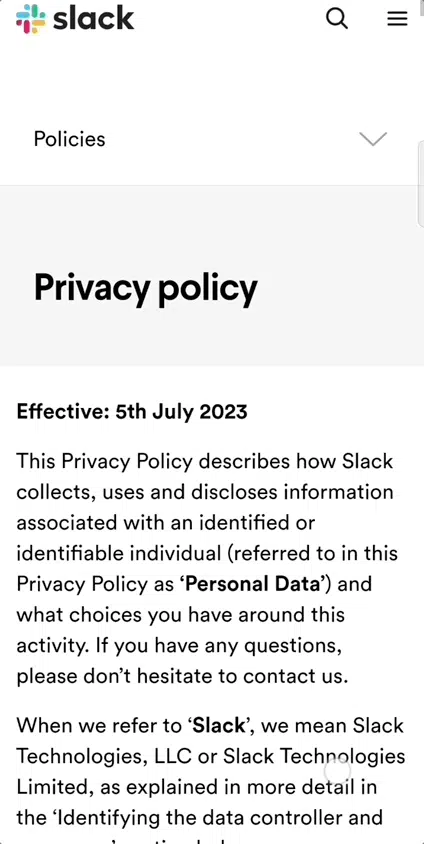
- Lastminute: https://www.lastminute.com/en/info/privacy/
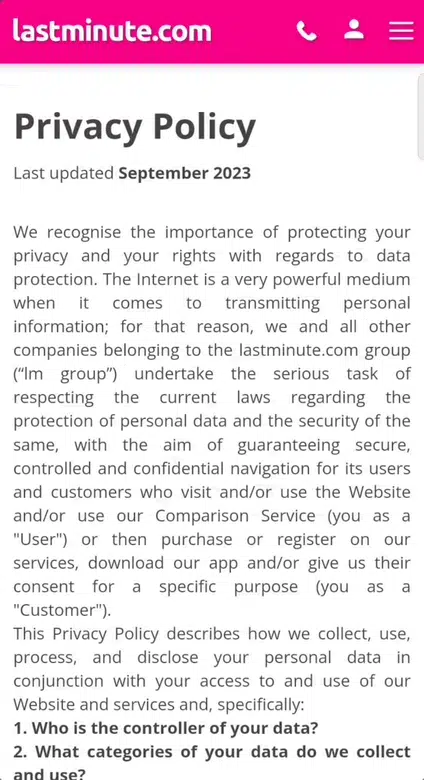
Remember, good privacy policies are clear, concise, and easily navigable. They should cover all necessary legal bases without overwhelming the user with jargon. Include sections on data collection, use, storage, user rights, and contact information.
Download our free app privacy policy template
You can use this as a sample privacy policy for Android apps and iOS apps alike. Keep in mind this privacy policy template is just an example: the legal text needs to be customized to your specific data processes and applicable laws. If you need a general website version, check out our privacy policy template. Remember that privacy policies are legal documents, and they must contain truthful information; otherwise, you could be putting yourself at risk.
How to use the template
- Download the template: get our free app privacy policy template in Word Doc format, copy and paste the HTML directly into your website, or generate your ready-to-use template with our guided setup.
- Fill in company/site and contact details: before publishing, fill in all [brackets] with your company/site info and contact details. Remember also to add the effective date.
- Customize data processing: the template simply provides examples of data collection. Customize the different sections.
- Use of cookies and other trackers: add information about the cookies you use or a link to your complete cookie policy.
- Address legal obligations: the template includes provisions for GDPR. Check which privacy laws apply to you and customize your privacy policy according to your location and your users’ locations to meet legal requirements.
Looking for a professional document?

We recommend using a privacy policy generator instead.
App privacy policy template (HTML text)
Copy and paste the App Privacy Policy Template HTML directly into your website.
<h1><strong>Privacy Policy for [Your Mobile App Name]</strong></h1>
<p><strong>Effective Date</strong>: [Insert Date]</p>
<p>At [Your Company Name], we are committed to protecting your privacy. This privacy policy explains how we collect, use, share, and protect your personal data when you use our mobile app, [App Name].</p>
<h3><strong>Data We Collect</strong></h3>
<p><em><strong>Note:</strong> List only the data types your app actually collects. Remove any items that don't apply.</em></p>
<p>When you use our app, we may collect the following types of personal information:</p>
<ol>
<li><strong>Personal Data</strong>: your name, email address, phone number, and other contact details.</li>
<li><strong>Account Details</strong>: username, password, preferences, and other information needed to create and maintain your account.</li>
<li><strong>Payment Information</strong>: credit/debit card details, billing address, and other payment-related data when you make in-app purchases.</li>
<li><strong>Device Information</strong>: device type, operating system, app version, and device identifiers such as advertising ID.</li>
<li><strong>Location Data</strong>: if you enable location services, we may collect your device's location to provide location-based features.</li>
<li><strong>Usage Data</strong>: information about how you use our app, including features accessed, duration of use, and in-app interactions.</li>
</ol>
<h3><strong>How We Use Your Information</strong></h3>
<p><em><strong>Note:</strong> Remove any purposes that don't apply to your app.</em></p>
<p>We use the data we collect to:</p>
<ol>
<li><strong>Provide and improve our services</strong>: deliver the features you request and personalize your experience.</li>
<li><strong>Provide customer support and communication</strong>: respond to inquiries and send service-related updates.</li>
<li><strong>Process payments and transactions</strong>: complete in-app purchases or other transactions you initiate.</li>
<li><strong>Send marketing and promotional messages (with your consent)</strong>: inform you about new features, updates, or offers if you have opted in.</li>
<li><strong>Comply with legal obligations</strong>: respond to legal requests and protect the rights and safety of our users.</li>
</ol>
<h3><strong>Legal Basis for Processing</strong></h3>
<p><em><strong>Note:</strong> This section is required under the GDPR. Only include the legal bases that apply to your processing activities. If you don't have EU/EEA users, you may remove this section.</em></p>
<p>We process your data based on the following legal grounds:</p>
<ol>
<li><strong>Consent</strong>: where you have given explicit consent, such as for marketing communications or location tracking.</li>
<li><strong>Performance of a contract</strong>: to fulfill any agreements with you, such as processing a purchase.</li>
<li><strong>Legitimate interests</strong>: to improve our app and conduct analytics, where these interests are not overridden by your rights.</li>
<li><strong>Compliance with legal obligations</strong>: to meet legal requirements such as tax reporting or responding to legal requests.</li>
</ol>
<h3><strong>Data Transfer Outside the EU</strong></h3>
<p><em><strong>Note:</strong> Include this section if your service providers or data centers are located outside the EU/EEA. Remove it if all your data stays within the EU/EEA.</em></p>
<p>We may transfer your personal data to countries outside the European Union (EU) or European Economic Area (EEA). Where this occurs, we ensure that appropriate safeguards are in place, such as standard contractual clauses, in compliance with the General Data Protection Regulation (GDPR).</p>
<h3><strong>Use of Trackers</strong></h3>
<p><em><strong>Note:</strong> List the specific tracking technologies you use (e.g., Google Analytics, Firebase, Meta Pixel). Include a link to your cookie or tracker policy if you have one.</em></p>
<p>We may use tracking technologies to enhance your experience, understand how you interact with the app, and display personalized content or ads. You can manage your preferences in your device settings.</p>
<h3><strong>Data Subject Rights</strong></h3>
<p><em><strong>Note:</strong> The rights below apply under the GDPR. If your users are subject to other laws (e.g., CCPA), adjust accordingly.</em></p>
<p>Under applicable data protection laws, you have the right to:</p>
<ol>
<li><strong>Access</strong>: request a copy of the personal data we hold about you.</li>
<li><strong>Rectification</strong>: correct any inaccurate or incomplete data.</li>
<li><strong>Erasure</strong>: request deletion of your data under certain circumstances.</li>
<li><strong>Restriction of processing</strong>: ask us to limit how we use your data in certain situations.</li>
<li><strong>Object to processing</strong>: object to our use of your data, especially for marketing.</li>
<li><strong>Data portability</strong>: receive a copy of your data in a portable format.</li>
</ol>
<h3><strong>Data Security</strong></h3>
<p>We implement technical and organizational measures to protect your personal data from unauthorized access, disclosure, or misuse, including:</p>
<ol>
<li><strong>Encryption</strong>: sensitive data, such as payment information, is encrypted during transmission.</li>
<li><strong>Access controls</strong>: access to personal data is limited to employees and contractors who need it to perform their role.</li>
</ol>
<h3><strong>Data Retention</strong></h3>
<p><em><strong>Note:</strong> Adjust retention periods to reflect your actual practices and any applicable legal requirements.</em></p>
<p>We retain your personal data for as long as necessary to fulfill the purposes for which it was collected, unless a longer retention period is required by law.</p>
<h3><strong>Changes to This Policy</strong></h3>
<p>We may update this privacy policy from time to time. Any significant changes will be posted within the app or on our website, and we will update the effective date at the top of this policy.</p>
<h3><strong>Contact Us</strong></h3>
<p>If you have any questions about this privacy policy or how we handle your data, please contact us at:</p>
<ul>
<li><strong>Email</strong>: [Your Email Address]</li>
<li><strong>Phone</strong>: [Your Phone Number]</li>
<li><strong>Address</strong>: [Company Address]</li>
</ul>
App privacy policy template (Word DOCX)
App privacy policy template (PDF)
How often should I update my app’s privacy policy?
Privacy policies should be updated regularly, especially when introducing new features, changing data practices, or to comply with updated laws. It’s advisable to review and update your policy at least annually or as your app evolves.
How do you create a mobile app privacy policy?
As explained before, writing a privacy policy is complex, and consulting a lawyer multiple times (because, yes, the document needs to stay up to date) might not be in your budget. Here are two suggestions to make it simpler:
- Use an app privacy policy generator: these are online tools that offer templates you can customize for your app. They’re a budget-friendly option and work with a subscription model so that you can go back and update your document at any time. Receive updates when the law changes or something’s missing in your policy.
- Consider legal advice (when necessary): in very complex scenarios, talking to a lawyer who specializes in data privacy can be helpful.
MOBILE APP PRIVACY POLICY GENERATOR
Easily create your app privacy policy in minutes
- With one click, start generating your privacy policy. Choose “app” when getting started.
- Select the clauses you need. Follow our guided setup for complex scenarios, like data collection from minors or user consent procedures.
- Copy and paste your embed code, use a direct link, or our API to add your policy to your app. You’re done!
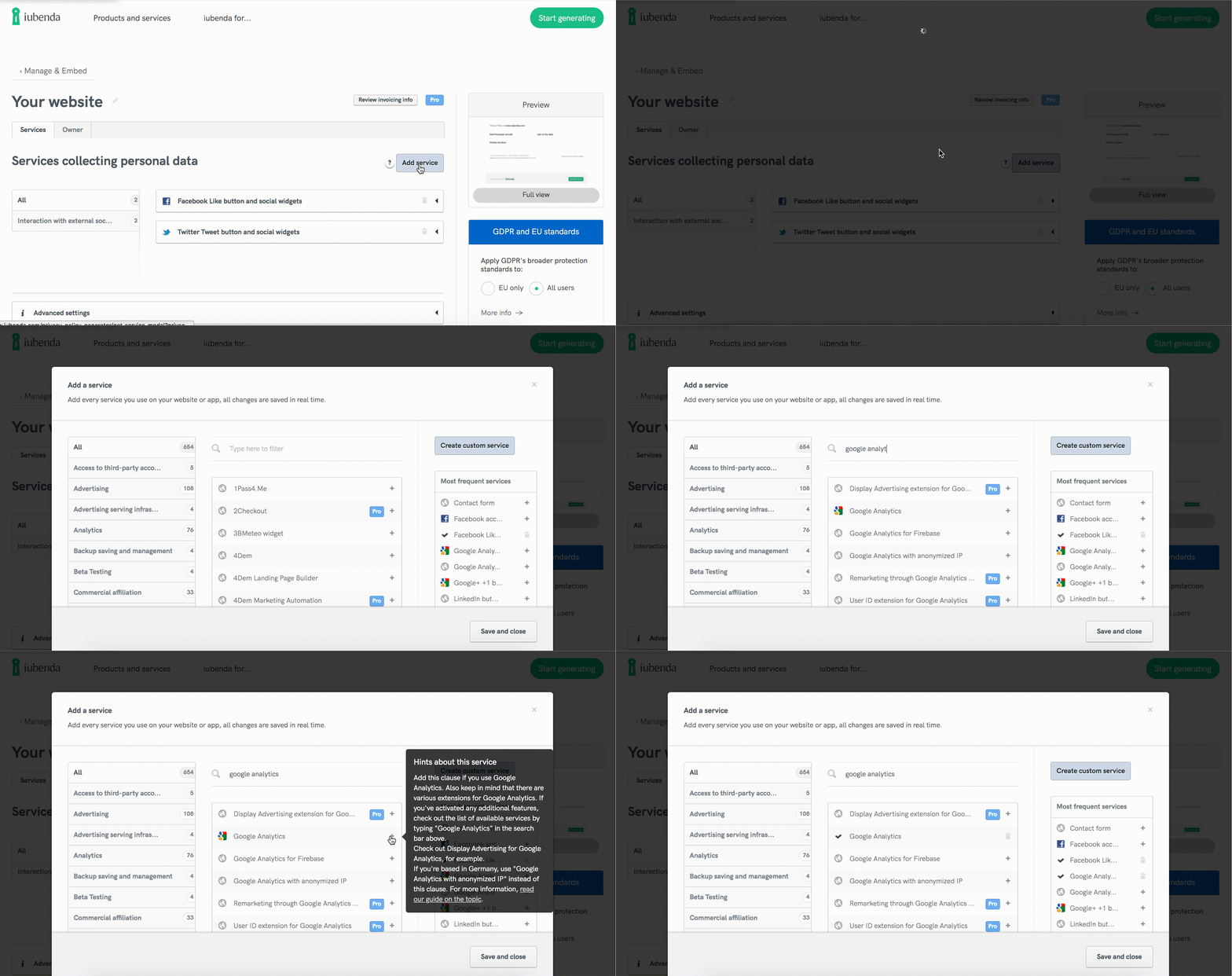
Try the generator with our 14-day money-back guarantee