

From 19 June 2026, businesses selling to consumers online in the EU need to offer a new way to cancel qualifying contracts: a dedicated, always-available “withdrawal function.” Here’s what it is, who it applies to, and where iubenda fits in.
What’s changing, and when
Directive (EU) 2023/2673 adds a new Article 11a to the Consumer Rights Directive (2011/83/EU). It introduces a mandatory online withdrawal function: a standardized, easy-to-find way for consumers to withdraw from a contract electronically.
The deadline: 19 June 2026
That’s when enforcement begins across the EU. If you sell to consumers online and a right of withdrawal applies to your contracts, the withdrawal function needs to be live for those contracts from that date. There’s no phase-in period.
The function isn’t a one-time step at sign-up. It has to stay accessible throughout the whole withdrawal period.
Does it apply to you?
The Directive reads as a financial services measure, but the withdrawal function reaches much further: it covers a wide range of online sellers, not just banks and insurers.
Three things need to be true for a given contract:
- It’s concluded at a distance, online. A website, app, or similar sign-up flow. Contracts signed in person don’t count.
- The customer is a consumer. Someone acting outside their trade or profession. Pure B2B is out of scope, but there’s no minimum threshold: even a few consumer customers bring that segment in.
- A right of withdrawal exists. The default for consumer distance contracts, with some exceptions under Article 16 (for example, certain digital content or made-to-order goods). Where an exception removes the right, the function isn’t required for that contract.
If all three are true, you need the withdrawal function.
| Business model | Withdrawal function needed? |
|---|---|
| SaaS, hosting, domain, website builders (B2C) | Yes, unless an Article 16 exception applies |
| Ecommerce, goods or digital content (B2C) | Yes, unless an Article 16 exception applies |
| Financial services at a distance (B2C) | Yes, plus extra sector obligations |
| Pure B2B (verified business customers only) | No |
| Mixed B2B and B2C on the same interface | Yes, for the consumer segment |
| Free tier with no paid consumer contract | No, but check whether your free and paid tiers share the same T&Cs or interface. If they do, the paid-tier withdrawal obligation may effectively apply to the whole flow. |
What the withdrawal function has to do
Four parts, all required where the function applies:
- A clear button. Labeled “withdraw from contract here” or an unambiguous equivalent, easy to find, available throughout the withdrawal period. Note: some member states mandate specific wording in their national implementing act. In Italy, for example, D.Lgs. 209/2025 (Art. 54-bis, Codice del Consumo) prescribes the exact labels “recedi dal contratto qui” and “Conferma recesso”. If you sell in a specific EU market, check the national transposition act for any prescribed language.
- A statement form. Captures the consumer’s name, the contract they’re leaving, and how they want to receive confirmation.
- A confirmation step. A button signaling confirmation of withdrawal. The label must be unambiguous and stand alone, with no extra text, pre-ticked boxes, or bundled consents.
- An acknowledgment. Sent on a durable medium (email works) without undue delay, including the statement and the date and time it was submitted.
Already have a cancel flow?
An account area with a cancel button can work, as long as the label signals a legal right (not just “cancel subscription”), there’s a real two-step confirmation flow, and it stays available throughout the period. A cancellation link in an email is not sufficient on its own. The function must be continuously available in your interface throughout the withdrawal period, not dependent on the user having kept an email.
Where iubenda fits
This requirement has two parts, and iubenda handles the one that’s legally required of every business in scope: the documentation. Under Article 11a, you must inform your users in your pre-contractual information that a withdrawal function exists and where to find it. Failing to do so extends the withdrawal period to 12 months and 14 days per contract, a significant compliance risk.
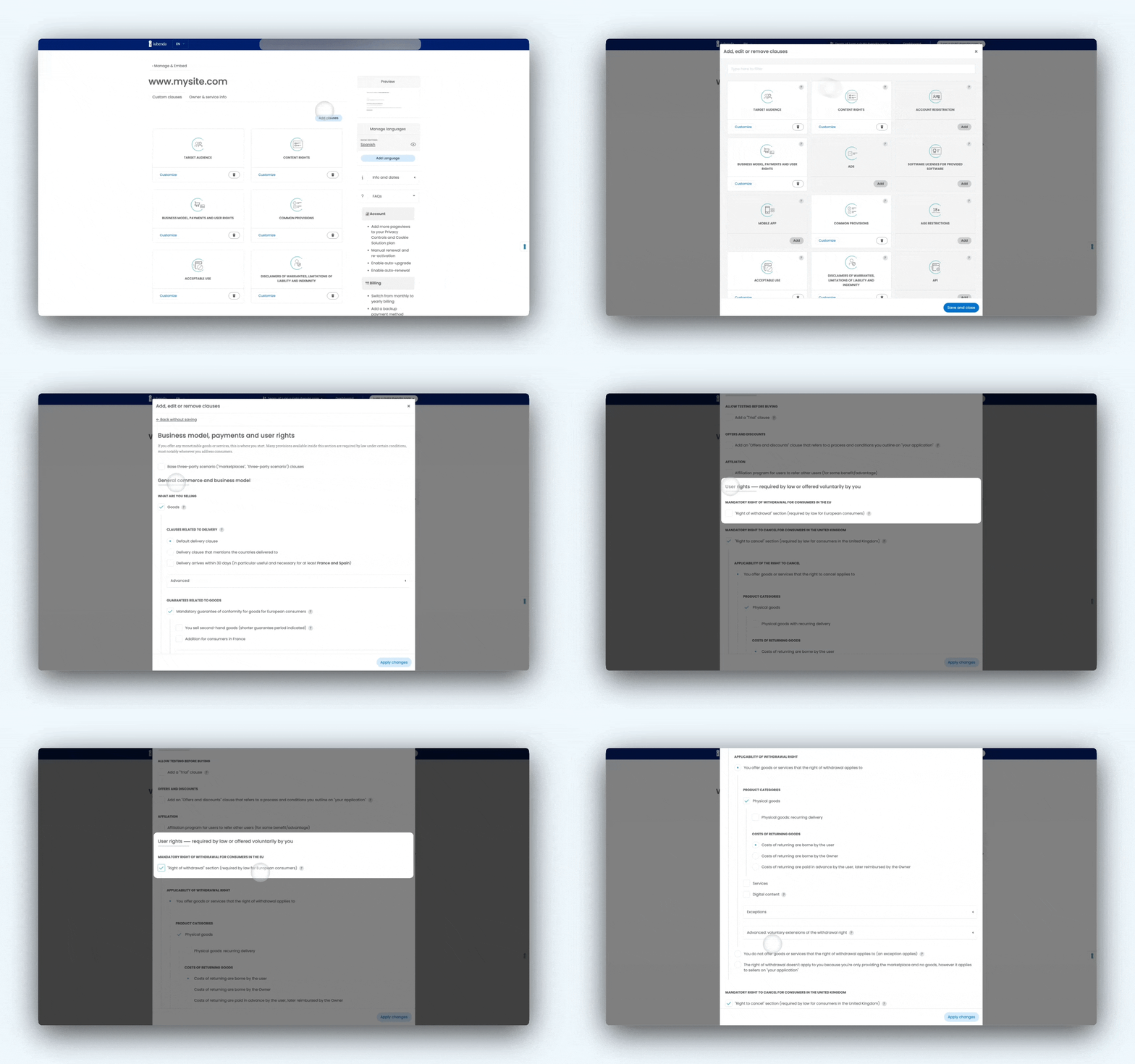
We’ve updated the Terms and Conditions Generator with an updated “Exercising the right of withdrawal” clause that covers exactly this and builds the language into your terms for you. The clause:
- States that the right of withdrawal applies and how to exercise it
- Covers all three exercise tracks: model withdrawal form, electronic submission, and the dedicated online withdrawal function
- Sets out the Owner’s acknowledgment obligations including content, date and time of submission
- Stays current, maintained by our legal team as the rules evolve
You add it in a few clicks, with no legal language to draft or maintain yourself.
The button and confirmation flow run in your own platform, wired to your order or subscription system. Build them in-house or with a dedicated tool, then point your iubenda terms to them.
Good to know
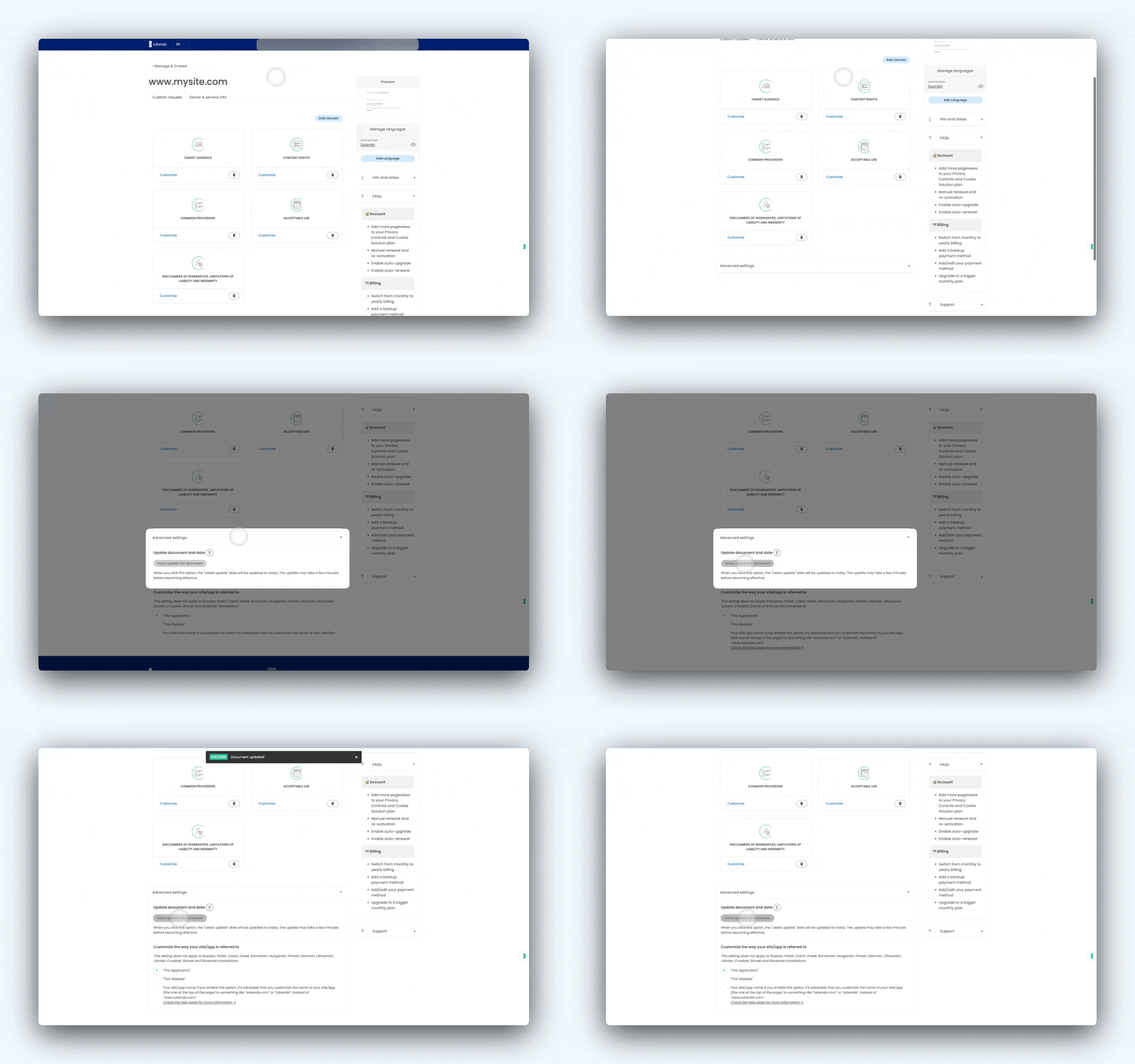
Already using iubenda for your T&Cs? If you already have the “Exercising the right of withdrawal” clause in your iubenda terms, we apply the updated wording the next time your document regenerates. To put it in place right away, force a manual update: open your T&C document in the iubenda dashboard, go to Advanced settings, and select Force update this document.
Selling through a third-party platform? If you sell via a marketplace or third-party interface, you remain responsible for ensuring the withdrawal function is available to your consumers. Where necessary, you may need to contractually require the platform operator to enable it.
What to do now
- Check whether you sell to consumers online and whether a right of withdrawal applies to your contracts
- If you’re mostly B2B, review your sign-up flow anyway, a few consumer users are enough to bring you in scope
- Check whether your free and paid tiers share the same T&Cs or interface
- Update your terms using the iubenda T&C generator to include the withdrawal function disclosure, missing this extends the withdrawal period to 12 months and 14 days
- If you already have the clause, force an immediate update from Advanced settings in your iubenda dashboard
- Implement the button, two-step confirmation flow, and email acknowledgment in your platform
- If you sell in specific EU markets, check the national transposition act for any mandated button wording
- If you sell via third-party platforms, verify the withdrawal function is available there too
Penalties
For cross-border infringements, fines can reach 4% of annual turnover in the relevant member state(s), or a minimum of €2 million where turnover data is unavailable. National enforcement bodies may apply additional sanctions under consumer protection law.
This guide is general information, not legal advice. For how the rules apply to your specific contracts, check with your legal team.